Stories of Change
Small Conversations. New Choices. Transformed Lives.
At SumArth, change is not measured only by the number of people trained or workshops conducted. We see change when a woman earns for the first time, when a girl asks a question she was once afraid to ask, when a boy carries a sanitary pad without embarrassment, or when a woman begins making informed decisions about her own body.
These are stories of that change.
Stories of Change
She Rewrote Tomorrow
1. Lalsa Devi: From a Fragile Home to a Livelihood of Her Own
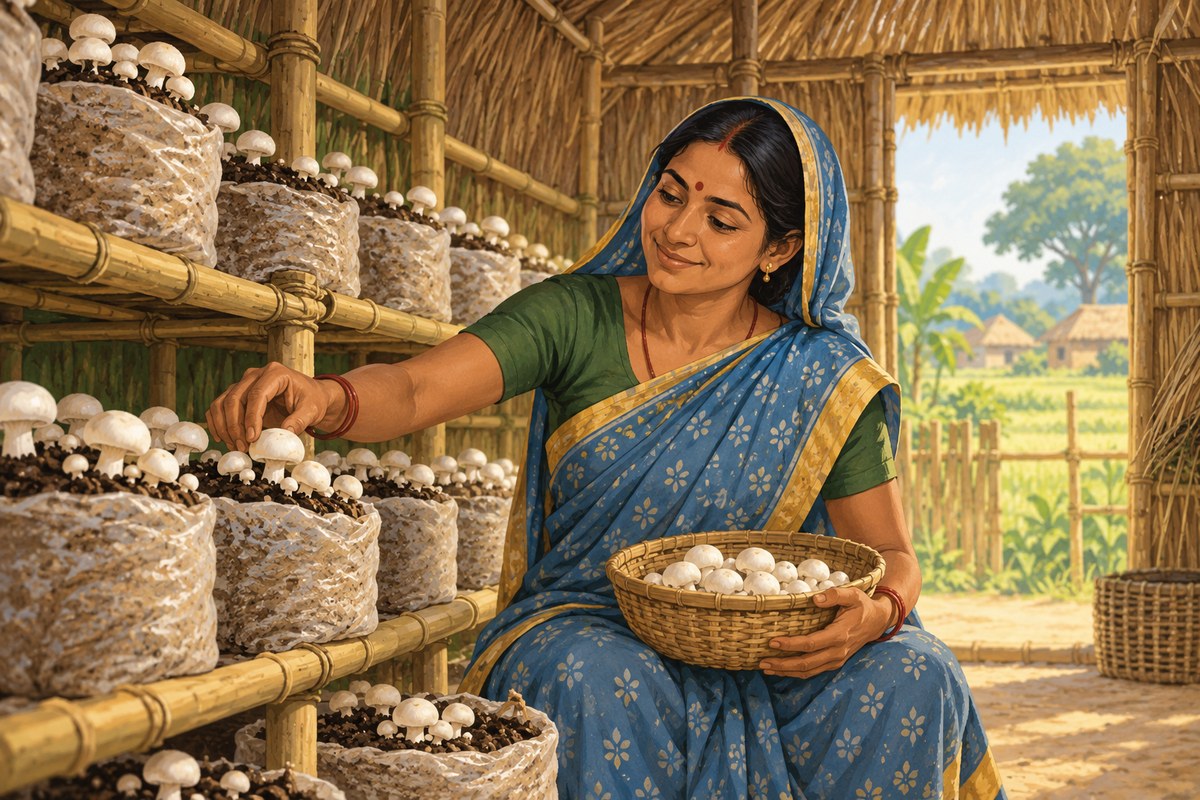
For Lalsa Devi, a woman from a Mahadalit community in rural Bihar, economic security once seemed distant.
She did not even have a pucca house of her own. Like many women around her, opportunities to earn independently were limited. Agriculture required land, investment and resources that were often beyond the reach of families like hers.
Then she was introduced to mushroom cultivation through SumArth.
Lalsa received training and support to establish a low-cost, climate-resilient mushroom hut made using locally available materials such as bamboo and kusha grass. The model enabled her to begin producing mushrooms in a small space, close to her home.
What began inside a simple hut gradually became something much larger: a source of regular income and a new sense of identity.
Today, Lalsa earns through mushroom cultivation and has become an example for other women in her community.
Her transformation demonstrates why SumArth sees livelihood differently. Giving a woman a skill is important, but ensuring that she has access to inputs, technical handholding and markets is what can turn that skill into sustainable income.
For Lalsa, mushrooms were not simply another crop.
They became a pathway from vulnerability to independence.
Change created: Livelihood | Financial independence | Confidence | Women-led entrepreneurship
2. The Woman Who Stopped Being Afraid to Bathe During Her Period
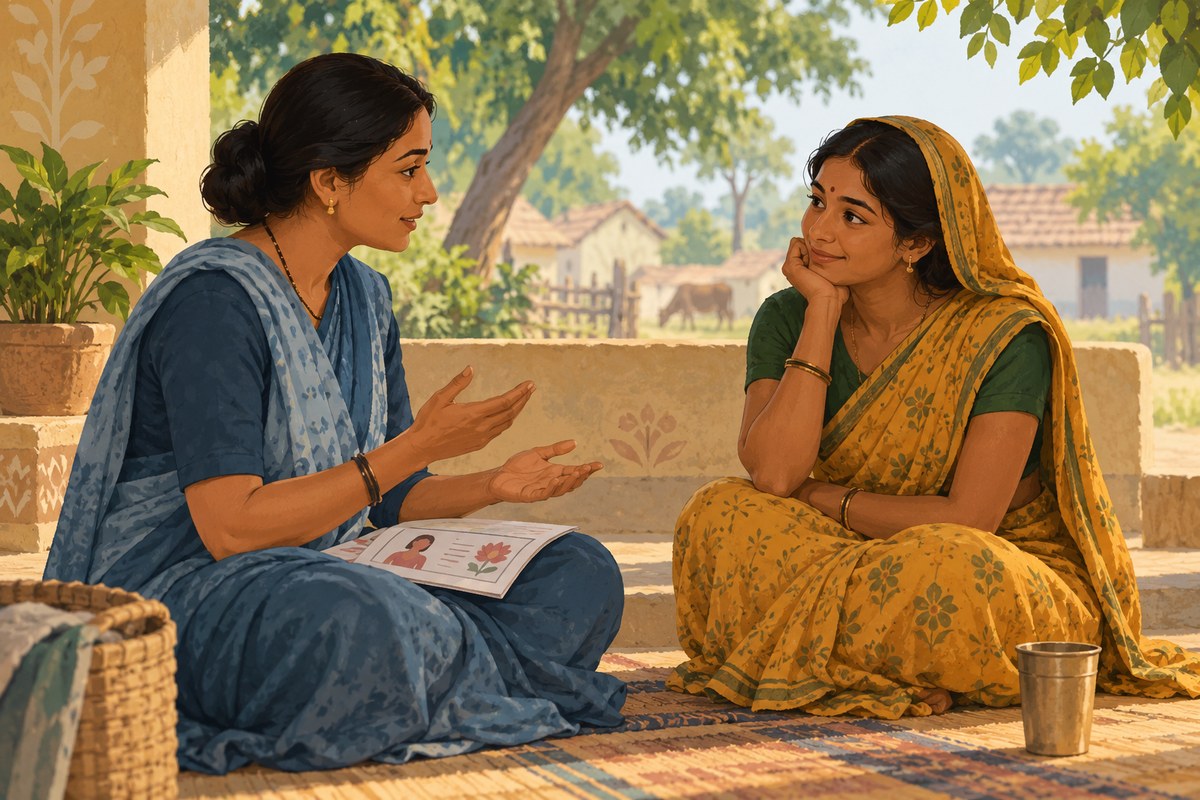
During one of SumArth's menstrual health interventions, a woman from a marginalised community shared something deeply personal.
She deliberately avoided bathing during menstruation.
Her reason revealed that the issue went far beyond menstrual hygiene. She believed that if she did not bathe, the resulting body odour would discourage her husband from approaching her sexually.
Behind what could easily have been dismissed as a "menstrual myth" was a complicated reality involving misinformation, fear, relationships and a woman's ability to exercise agency over her own body.
SumArth continued engaging with her rather than treating the issue as something that could be solved through a single awareness session.
Through repeated conversations and counselling, she began understanding menstruation, hygiene and her body differently.
Eventually, she changed her menstrual hygiene practices.
But the more important change was in her voice.
She began talking more openly about her health, her rights and her dignity.
Her story reminds us that menstrual health education cannot simply be about distributing pads or teaching hygiene. Sometimes, a conversation about menstruation opens the door to much larger conversations about bodily autonomy, gender, relationships and self-respect.
The change began with bathing. It grew into something much more powerful—the confidence to speak about herself.
Change created: Menstrual health | Behaviour change | Bodily awareness | Dignity
3. From Refusing to Touch a Pad to Carrying One Through the Village
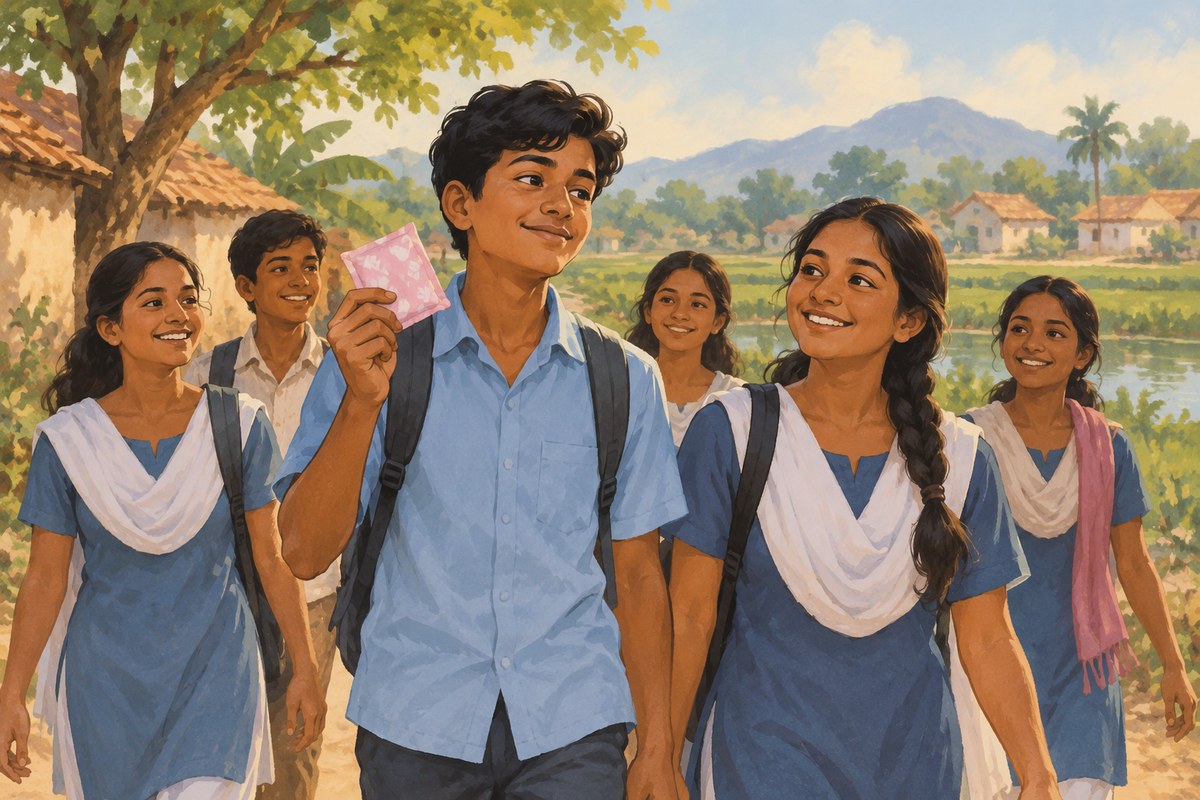
When SumArth began involving boys in menstrual health conversations, resistance was visible.
During a Pad Yatra, some boys were uncomfortable even holding a sanitary pad.
To them, periods belonged to a private world of girls and women. A sanitary pad was something to hide, not something a boy should carry publicly.
But SumArth's approach through PeriodShala and Pad Yatra has been built around one fundamental belief:
Periods cannot remain only a women's conversation if we want menstrual stigma to disappear.
The boys were encouraged to participate, ask questions and understand menstruation as a normal biological process rather than something shameful.
Gradually, embarrassment gave way to understanding.
And then something remarkable happened.
The same boys who had once hesitated to touch sanitary pads began carrying them openly through their village as part of the awareness campaign, speaking to others about menstruation.
The object they once wanted to hide had become something they could hold publicly.
That seemingly small action represented a profound change.
A taboo was being challenged not only by menstruators, but by boys who could become tomorrow's brothers, husbands, fathers and community leaders.
When boys stop laughing, whispering or looking away and start participating in the conversation, menstrual health begins becoming a community issue rather than a women's burden.
Change created: Male engagement | Gender sensitisation | Breaking stigma | Community behaviour change
4. The Women Who Once Hesitated to Grow Mushrooms — and Now Earn From Them
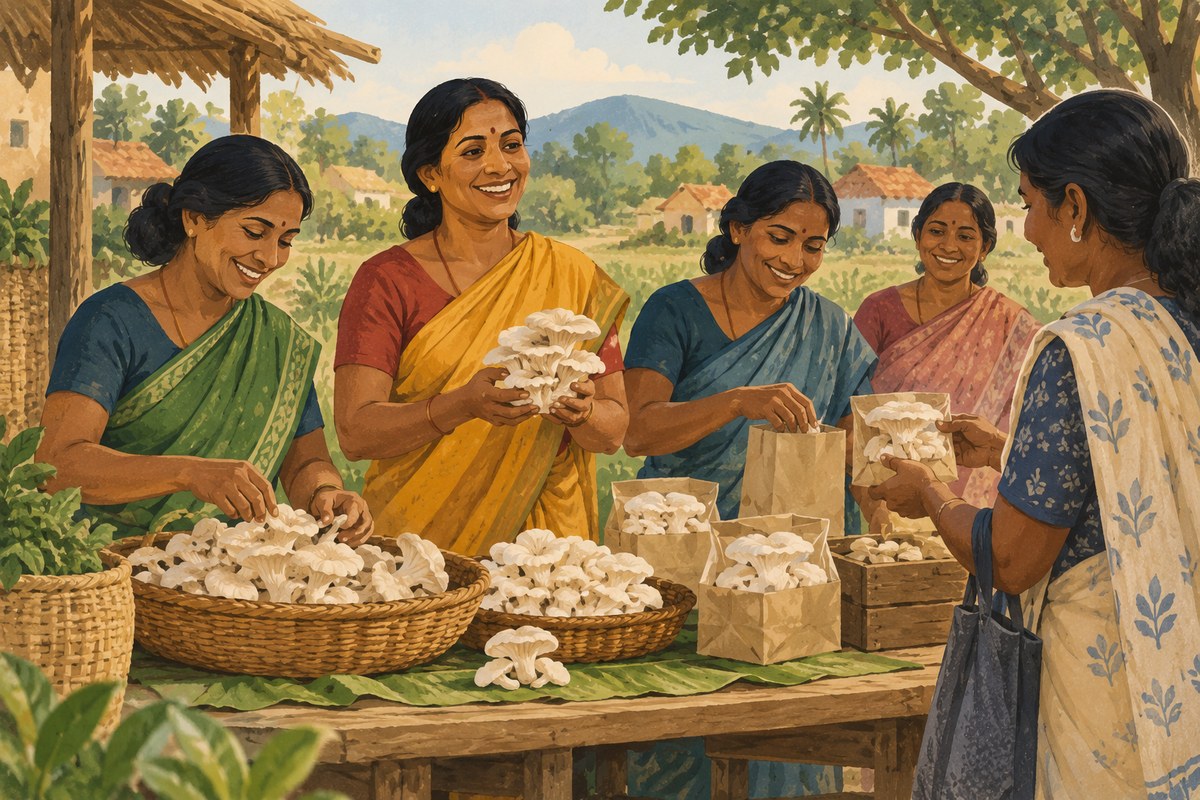
When SumArth first introduced mushroom cultivation to rural women, enthusiasm was not automatic.
For many women, mushrooms were an unfamiliar crop.
Questions came immediately:
"Can we really grow this?"
"What happens if the crop fails?"
And perhaps the most important question:
"Even if we grow mushrooms, who will buy them?"
These concerns taught SumArth an important lesson: training alone does not create livelihoods.
Women needed an ecosystem.
So the intervention evolved beyond classroom training. Women received technical guidance, support with inputs, continuous handholding and connections to markets.
As the first women successfully harvested and sold mushrooms, something began changing within the villages.
Other women could see the evidence.
A woman like them had learnt something new.She had produced something.Someone had bought it.And money had come into her hands.
Confidence spread from one household to another.
Over time, mushroom cultivation grew into a livelihood opportunity reaching thousands of rural women.
But its impact cannot be understood through income figures alone.
For women who had rarely participated in financial decisions, earning their own income could change how they viewed themselves and how their contribution was viewed within their households.
A mushroom crop takes only a small space to grow. Yet the confidence growing alongside it can occupy a much larger space in a woman's life.
Change created: Sustainable livelihoods | Women's income | Climate-resilient agriculture | Entrepreneurship
5. From Silence to Questions: When Girls Started Talking About Periods
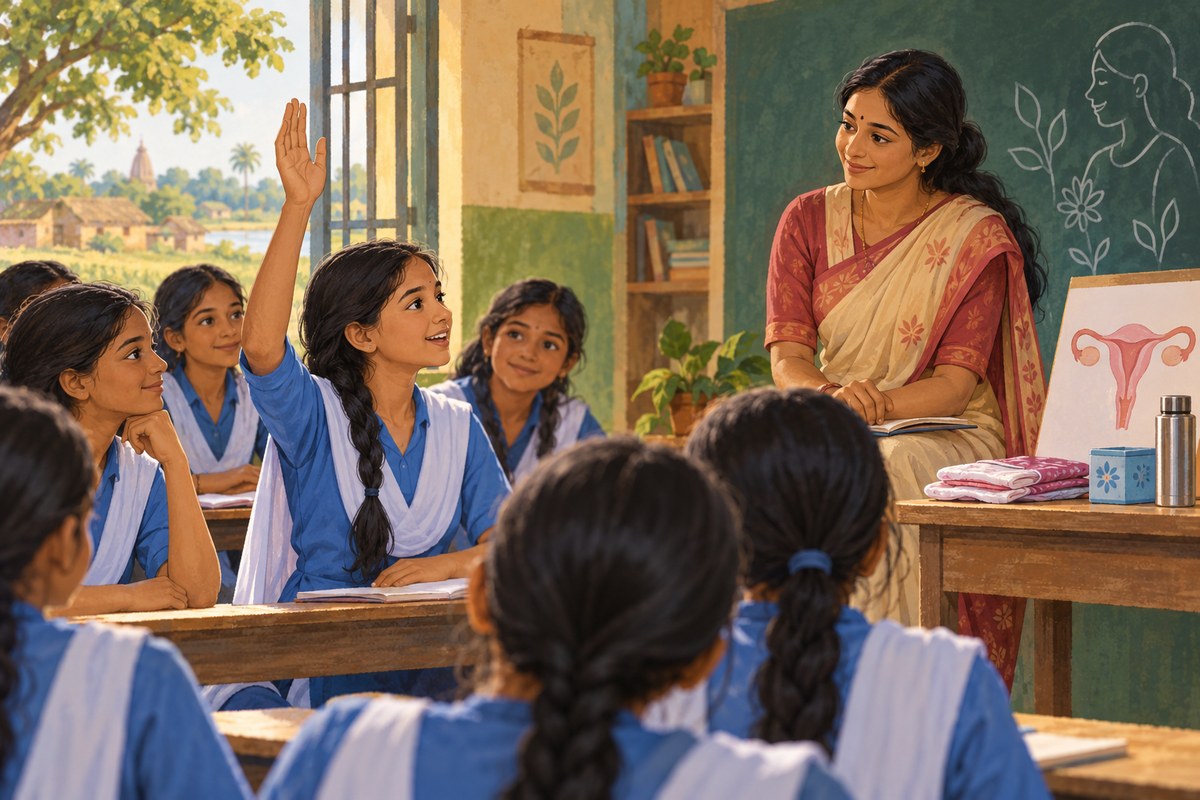
When SumArth began conducting menstrual health sessions in rural Bihar, sometimes the greatest challenge was simply getting girls into the room—and keeping them there.
Some parents questioned why menstruation needed to be discussed at all. At times, mothers took daughters away during sessions. In communities where periods had remained hidden for generations, talking openly about menstruation itself felt radical.
SumArth continued.
Through PeriodShala, SABLA, Pad Yatra, community meetings and repeated conversations, menstrual health was gradually taken out of whispers and brought into classrooms and community spaces.
Girls were encouraged to ask the questions they had previously kept to themselves.
Why do periods happen?
Is menstrual blood dirty?
Should I bathe during my period?
Can I enter a temple?
Can I play?
Can I talk about periods with boys?
Is something wrong with my body?
Every question mattered because every question represented a small break in the silence.
The transformation did not happen in a day.
It happened conversation by conversation, girl by girl, mother by mother and village by village.
Today, SumArth's menstrual health work has reached tens of thousands of women and adolescent girls. But the deeper impact lies beyond the numbers.
It lies in a girl discovering that menstruation is not a disease.
It lies in a mother deciding not to pass the same myths to her daughter.
It lies in a classroom where the word "period" can finally be spoken without shame.
And it lies in a generation of girls beginning to understand that their bodies are not something to be ashamed of.
Change created: Knowledge | Confidence | Menstrual dignity | Intergenerational behaviour change
The Change We Are Building
These five stories may appear different.
One begins inside a mushroom hut.Another begins with a sanitary pad.One begins with a woman changing a hygiene practice.Another begins when a boy overcomes embarrassment.And another begins when a girl finally raises her hand and asks a question.
But they are connected by the same idea:
Dignity.
At SumArth, we believe that women's empowerment cannot be addressed in fragments. A woman needs knowledge about her body, but she also needs economic opportunity. A girl needs access to menstrual products, but she also needs the confidence to question discriminatory norms. A rural woman needs livelihood training, but she also needs markets, support and the ability to make decisions about the income she earns.
This is why our work brings together menstrual health and dignity, climate-resilient livelihoods, gender awareness and women's economic empowerment.
Because sometimes transformation begins with something very small:
A question.A sanitary pad held without shame.A mushroom harvested with pride.A woman receiving her first income.A girl realising that there is nothing wrong with her body.
And from those small moments, lasting change begins.