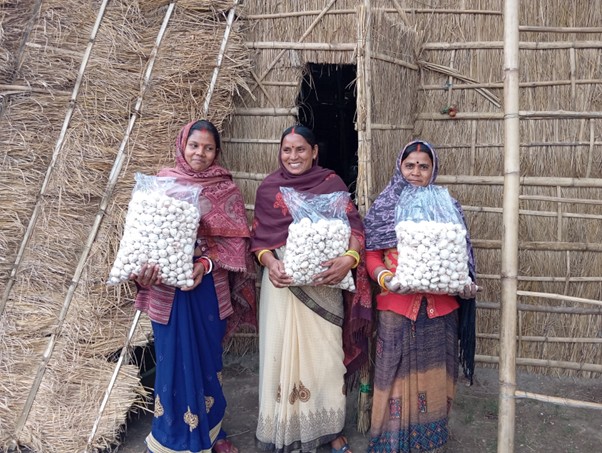
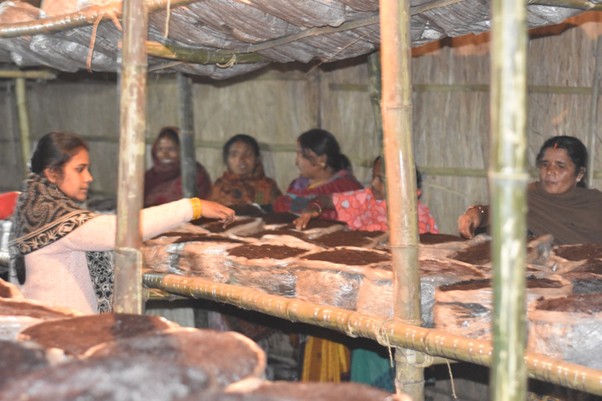
Sakhi Lakhpati is SumArth’s flagship women-led livelihood initiative that transforms rural women into confident agri-entrepreneurs through eco-friendly mushroom cultivation. Women are trained across the complete value chain—from constructing mushroom huts and preparing compost to cultivation, harvesting, grading, and marketing—enabling steady, year-round incomes and grassroots leadership.
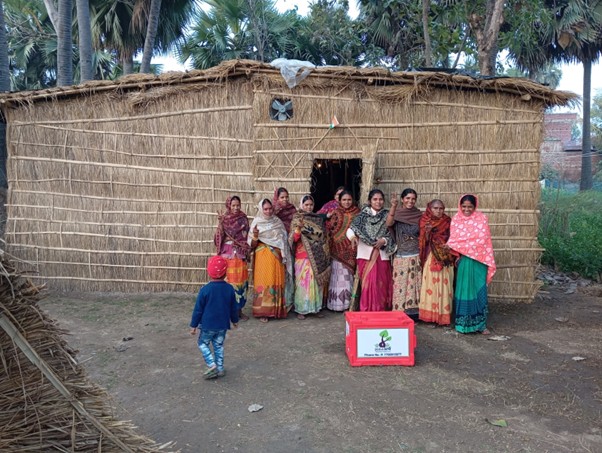
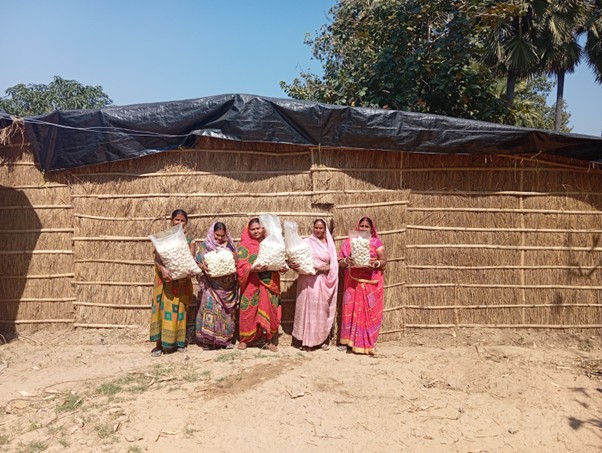
At the heart of Sakhi Lakhpati lies a powerful waste-to-wealth and circular economy model. Mushroom huts are built using locally sourced bamboo and kusa (kusha) grass collected from nearby rivers, turning natural waste into productive infrastructure. After harvest, spent compost is reused as organic fertilizer for crop fields and kitchen gardens—reducing waste, improving soil health, lowering input costs, and strengthening climate resilience.
Beyond income generation, the program builds women’s confidence, leadership, and financial independence. Women who once depended on seasonal wage labor now manage production cycles, accounts, and market linkages through SHGs and collective platforms. By connecting them with processing units and market networks, the program supports women to move up the value chain—proving that when women become lakhpatis, families prosper, communities grow stronger, and ecosystems heal.